
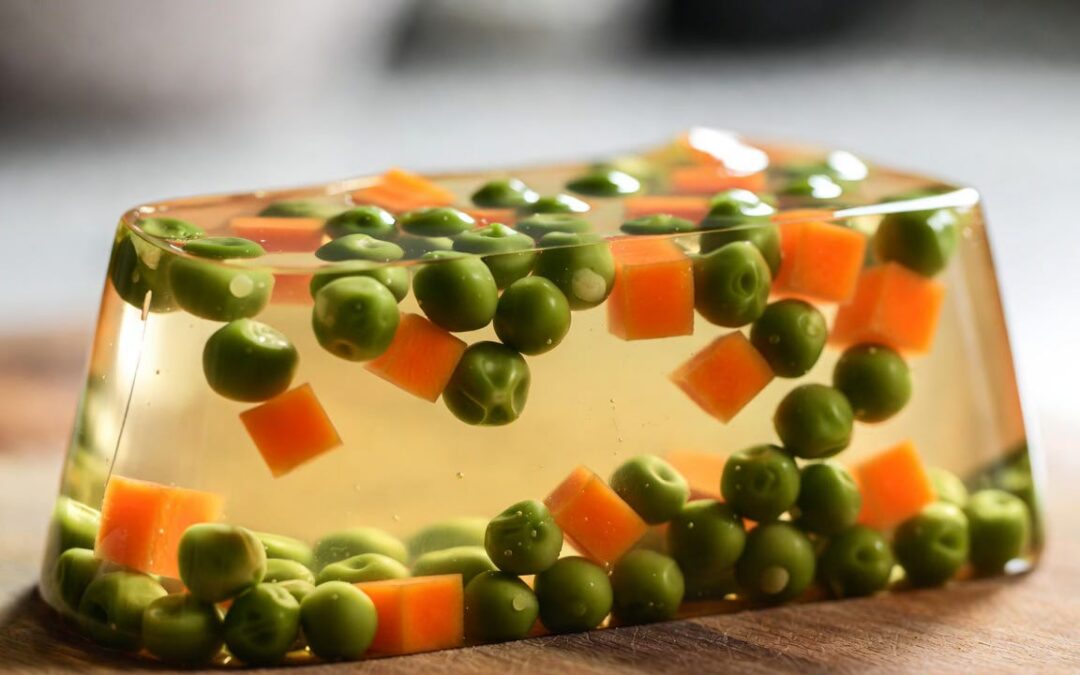
I live in the Midwest. I grew up eating Jello. Jello was considered a legitimate side dish, on equal footing with the potatoes, the green beans, and the iceberg lettuce. It was a salad, really, if you put enough peas or shredded carrots into it. Jello was so important to a meal that my diabetic uncle would bring his own sugar free Jello to family gatherings, just to ensure that he had some to eat.
Once, in a coffee shop in Seattle, the barista asked where I was from. When he learned I lived in the Midwest, he commented, “You put mayonnaise in your Jello.” Yes. Yes, we do.
Doing research is like making Jello. Both can feel complicated and mysterious. We might be out of practice. Growing up, we had whole cookbooks devoted just to making Jello. Most of us have little practice doing research and even fewer cookbooks for it. That’s okay.
Both research and Jello may seem irrelevant in the age of AI and restaurant delivery apps. I contend that neither of those is true. It’s more important now than ever to ask good questions, and know our fellow human beings, and who says that a little extra collagen in our diets in the form of gelatin is going out of fashion? I don’t.
There are two components to making Jello, just like there are two components to doing good research.
First, there is a mold, a shape that forms the process. Some molds are simple, like the glass bowl that lets the colors of the Jello shine through. No need to even unmold that. Just admire it from the side and dip your spoon in. This mold is a single question, asked of a single type of audience, that produces fast, easy-to-digest results on one topic of great importance. It is the “how” of doing research. How will we find out what we need to know?
Some molds are complicated, like the star mold with the intricate patterns, that tempt you with the possibility of plated beauty. How marvelous would it be to wow your guests with that perfectly unmolded gem, carried out to the dining room table with pride? This mold is like the complex process of using both qualitative and quantitative methods – interviews, surveys with branching and skip patterns, focus groups to validate what you have heard – a masterpiece of research design delivering strategic and deeply rigorous insights.
The second component is what you put in your Jello mold. Whether it is a simple glass bowl or the complicated star, the sky is the limit when choosing your ingredients. Yes, it could be mayonnaise or peas or pineapple (canned, never fresh, of course), or all three. How about a can of ginger ale or a dollop of whipped topping? Why not mix two or three flavors of Jello and make colorful layers?
Research questions are the ingredients. They are the “what” in the research process. The sky is the limit on the questions you ask, anything you need to know to give you clarity, provided you don’t overflow your mold and try to overburden your process with more than it can deliver.
Perhaps I am the only one who remembers the Jello mishaps in my life? Mishaps like not waiting long enough for each layer to set before adding the next, leaving the finished mold in hot water for too long and ending up with a soupy mess, or overdoing the mayonnaise. It happens.
Why do I think it’s important to remember that doing research is like making Jello?
Because in thinking about research as Jello mold and ingredients, that research seems little less mysterious and as much fun as we used to have eating those amazing, giggling squares of fruity goodness. I think it is.